Nobody hands you a manual for the stuff around an electric car. You drive home with a key card and maybe a charging cord, and the rest you tend to learn the hard way: the road trip where the fast charger has the wrong plug, the cold morning with soft tires, the day a tiny 12-volt battery strands a car with a nearly full pack.
This is the short list of gear that actually earns its place, sorted by the job it does, with the right version for your car’s charge port.
When you buy through links on this page, we may earn a commission at no extra cost to you.
⚡ The first EV kit · October 2026
Everything your first EV quietly asks for.
Ten things we would actually buy, sorted by the job they do. Pick your charge port below and every card shows the version that fits your car.
10PicksChosen for EV life, not car life
4JobsHome, road, safety and fun
2Plug typesNACS and CCS both covered
Your charge port
Not sure? NACS is the small, slim port Tesla made. CCS is the bigger one with a round J1772 plug on top and two large pins below.
01
Charge at home
Where most of your charging will happen, and where an EV beats a gas car every single morning.
Top pick
01/10Home charger · Our top pick
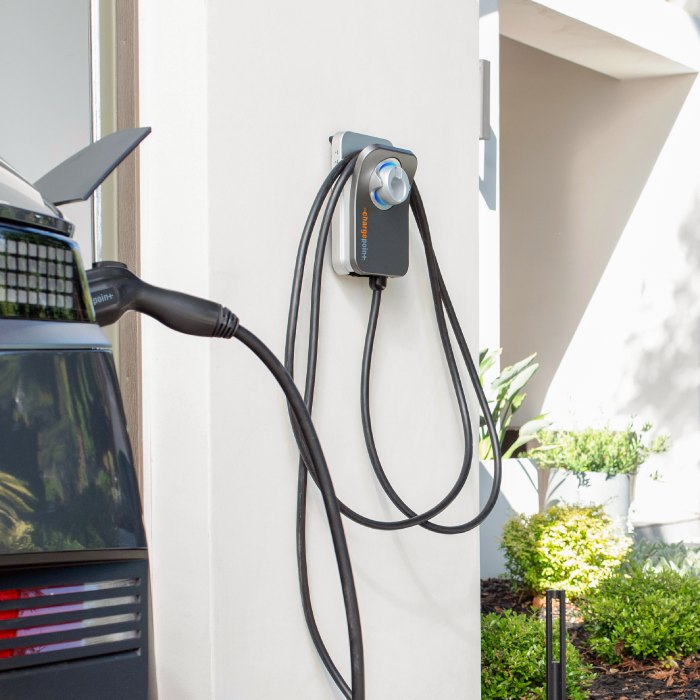
ChargePoint HomeFlex
If you buy one thing, make it a Level 2 charger. This is the one we would put on our own wall.
Plug in when you get home, wake up full. The HomeFlex earns the top spot with a genuinely good app that schedules charging for cheap overnight rates and logs every session.
Max power50 A
Cable23 ft
PlugsNACS or J1772
Needs a 240-volt circuit. The hardwired version is an electrician job, so get a quote early.
No app, no Wi-Fi, no subscription. Just a tough metal box that charges fast and never needs an update.
Built in Canada with a weatherproof metal case, it is happy in an open carport through a hard winter. Most EVs can schedule charging from their own app, so you may not miss the smarts at all.
Ships with a J1772 plug. NACS cars pair it with pick 06.
See exactly what your car costs to charge, down to the cent.
It clips into your electrical panel and tracks every circuit, so you learn your real cost per mile and spot the other energy hogs in the house. We like the version with 8 circuit sensors.
It installs inside your breaker panel. Have your electrician add it while they wire the charger.
A travel charger and the right adapters turn a patchwork of plugs into one network.
04/10Travel charger · NACS
Lectron Portable Level 1 and 2 Charger
The charger that lives in your trunk.
Plug it into a regular household outlet at a friend's place, or a 14-50 outlet at a campground or cabin for full Level 2 speed. Two plugs, one cable, adjustable from 8 to 40 amps.
Campgrounds, cabins and plenty of garages have a 14-50 outlet. Plug in there and you get proper Level 2 speed, up to 40 amps, anywhere you stay the night.
Opens the Tesla Supercharger network to a CCS car.
Superchargers are the biggest and most reliable fast-charging network in North America, and this adapter is how a CCS car joins it. Lectron says it is the first of its kind certified to the UL 2252 adapter standard.
Check two things first: that your car is approved for Supercharger access, and whether your automaker includes or sells its own adapter. Some brands only honor their own under warranty.
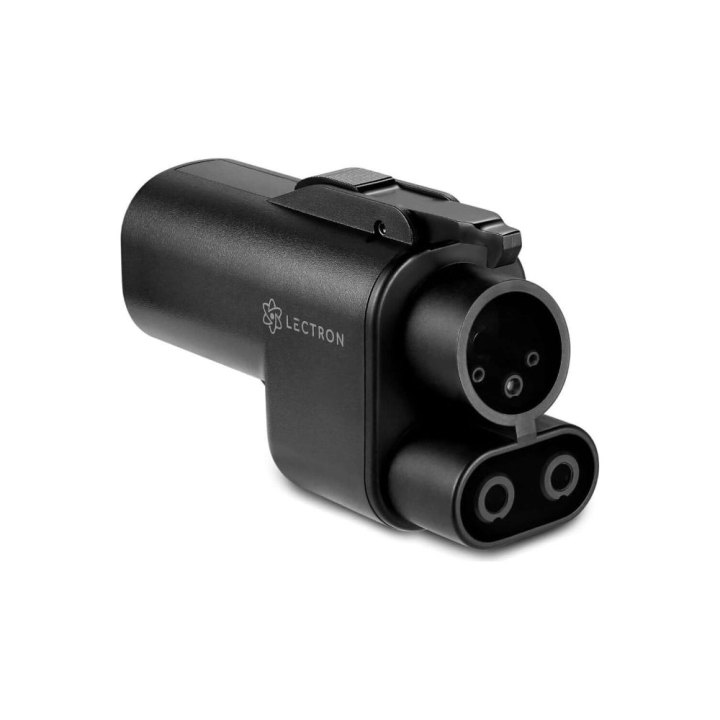
The reverse trick: CCS fast chargers for a NACS car.
Superchargers are everywhere, but not everywhere. This adapter lets a NACS car use CCS stations from networks like Electrify America, which is a real comfort on a long trip. UL 2252 certified, rated for 1,000 volts.
Check your car supports it. On a Tesla, look for CCS Adapter Support: Enabled under Controls, Software, Additional Vehicle Information.
Hotel chargers and a friend's Tesla Wall Connector, unlocked.
Tesla Destination Chargers are all over hotels, wineries and parking garages. This adapter lets a J1772 car use them, along with any Tesla Wall Connector, at up to 80 amps.
The small, cheap adapter you will use more than you think.
Most public Level 2 stations, and most home chargers, still use J1772. This one lets a NACS car plug into all of them. Many cars come with one, so check the frunk before you buy, and keep a spare if yours is the only one.
Two cheap insurance policies for the problems EVs do still have.
07/1012-volt rescue
NOCO Boost Plus GB40
Surprise! Your EV still has a little 12-volt battery.
It runs the computers that wake the car up, and when it dies, the giant battery underneath can't help you: the car simply won't turn on. This pocket jump starter fixes that in a minute. Your owner's manual shows the jump points, often under the frunk or behind a small panel.
Many EVs skip the spare tire, and heavy EVs are hard on tires. Tires also lose about 1 psi for every 10°F drop, and low tires cost miles. Set the pressure, press go, and it stops itself when it gets there.
Not essential. Just the kind of thing that makes owning an EV more fun.
09/10Battery health check
OBDLink MX+
Buying used? Read the battery before you buy it.
This Bluetooth dongle plugs into the diagnostic port under the dash. Paired with a model-specific app (LeafSpy for the Nissan LEAF is the classic), it can read battery health on many EVs. It is the closest thing to a battery inspection you can do in a parking lot.
Support varies by model, so check that the app you plan to use covers your car.
Most EVs can keep their 12-volt outlets live while parked (look for Camp, Pet or Utility mode), so a compressor fridge stays cold all weekend with a tiny draw on the big battery. Cold drinks at the trailhead, ice cream at the beach!
$ under $100 · $$ $100 to $300 · $$$ over $300. Prices move, so check the current price on Amazon. Product photos courtesy of the manufacturers. As an Amazon Associate, Electric Future earns from qualifying purchases.
How we picked
We looked for gear that solves a problem specific to owning an EV, not car accessories in general. Every pick is a well-reviewed product from a maker that stands behind it, sold on Amazon in the US. Where the right answer depends on your charge port, the kit shows the version that fits. Adapters got extra scrutiny: we chose ones certified to UL 2252, the safety standard written for EV charging adapters.
What you can skip, for now
Model-specific mats and frunk organizers. Worth having, but buy them for your exact car after you have lived with it for a few weeks and know how you use the space.
Sunshades and cabin heaters. Most EVs can heat or cool the cabin from the app while plugged in, which beats any shade and costs no range. Our guide to EV winter range loss explains why that matters in the cold.
A second home charger. Even two-EV households usually get by with one good Level 2 charger and a little turn-taking overnight.
Before you buy a home charger
Get an electrician’s quote first. A Level 2 charger needs a 240-volt circuit, and the cost of running one depends on how far the garage is from your panel and whether the panel has room. While you are at it, check your utility’s website: many offer rebates on chargers or installation, and some have cheaper overnight rates for EV charging. Those two numbers will tell you more about your real cost than the price of the charger itself.
Once you are charging, our EV Charging Speed Chart shows how fast your car fills up on a road trip, and the Supercharger Tracker shows whether your car can use Superchargers today.
What we are still verifying
Automaker adapter policies are still settling. Some brands approve third-party adapters for Supercharging, and some only honor their own under warranty. We are tracking this model by model in the Supercharger Tracker and will update the adapter picks here as policies change.
First EV kit FAQ
Do I really need a Level 2 charger?
Not always. A standard household outlet adds roughly 3 to 5 miles of range per hour, so if you drive less than about 40 miles a day and park near an outlet, Level 1 can keep up overnight. Level 2 adds that much in a few minutes, which is what makes an EV feel effortless.
Which charge port does my car have?
Teslas have always used NACS, and a growing number of new models from other brands have switched to it since 2025. Most other EVs, including nearly every used one, use CCS. One look at your charge door settles it: NACS is small and slim, while CCS has a round J1772 plug on top with two large pins below.
Will a third-party adapter void my warranty?
It depends on the automaker. Check your owner’s manual or your brand’s charging page before you fast charge with any adapter that did not come from the automaker.
Why does an electric car have a 12-volt battery?
It powers the computers, locks and lights, and it is what wakes the car up. The big high-voltage battery only connects after that. If the 12-volt battery dies, the car will not start, no matter how full the main pack is. That is why a small jump starter belongs in every EV.
⚡ Want to know when the kit changes? We send one short email when a pick gets replaced or something better ships. Always free. Subscribe to Electric Future.
Product details from the manufacturers (ChargePoint, United Chargers, Emporia Energy, Lectron, NOCO, Fanttik, OBDLink and BougeRV) and their Amazon listings, checked October 4, 2026. Prices and availability change. Product photos courtesy of the manufacturers.


 Top pick