
Germany just crossed a line. In October, fully electric cars took 37 percent of the new-car market: 94,086 of them, more than petrol and diesel cars combined for the second month in a row. Less than three years after the old subsidy was scrapped overnight and sales collapsed, the birthplace of the automobile is buying electric faster than its own car industry predicted!
So which electric cars are Germans actually choosing? We added up the Kraftfahrt-Bundesamt’s registrations for August and September, the two latest months with model-by-model figures, and ranked the top 10. The KBA publishes October’s model breakdown later this week, and we will update this list when it does.
1. Tesla Model Y: 9,464

Germany’s best-selling electric car of the last two months, and in September the best-selling car of any kind: the Model Y outsold the Volkswagen Golf, which has been Germany’s best-selling car every year since 1981. It is only the second time the Model Y has done it. The catch is Tesla’s rhythm. Its German registrations swing with the delivery quarter, so the Model Y went from 299 in July to 8,038 in September, and the Tesla brand as a whole registered just 2,932 cars in October. Over the full year it sits second, close behind the Elroq.
2. Skoda Elroq: 7,166

The most consistent electric car in Germany. The Elroq registered more than 3,000 cars in every month of 2026 through September and leads the year to date with 30,845, ahead of the Model Y. Compact on the outside, roomy inside and priced below its Volkswagen and Audi cousins, it has helped keep Skoda Germany’s strongest import brand.
3. Tesla Model 3: 6,117

The Model 3 rode the same quarter-end wave as the Model Y, jumping to 4,512 in September after 1,605 in August. In September it also led Germany’s mid-size class outright, petrol and diesel included. For the year it sneaks into the top 10 with 15,069.
4. Skoda Enyaq: 4,992

The Elroq’s bigger sibling just had a facelift that swapped the old grille for the Elroq’s cleaner face, and it keeps selling like a fixture: fourth in Germany for the year with 24,344, almost exactly level with the ID.3. Family buyers who need more room than the Elroq offers end up here.
5. Volkswagen ID.4 and ID.5: 4,984
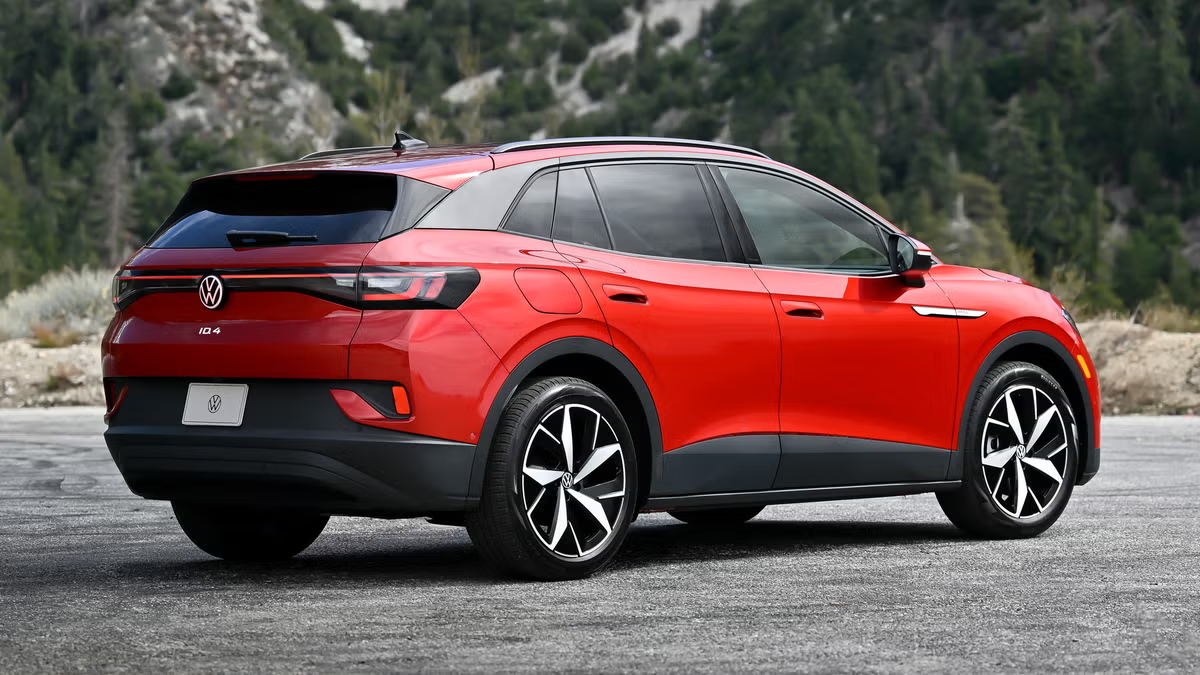
The KBA counts the ID.4 and its coupe twin, the ID.5, together. The pair had a strong summer, peaking at 3,241 in July, and added nearly 5,000 more across August and September. Volkswagen has promised a new ID.4 is on the way.
6. Volkswagen ID.7: 4,567

Germany’s best-selling EV of 2025 has been overtaken by its own group’s smaller cars, but the ID.7 still does steady business: more than 2,000 registrations in every month this year except May, for 22,472 so far.
7. Mercedes-Benz GLC EQ: 4,369

The fastest climber on the list. The electric GLC registered zero cars in January and 28 in February; by August and September it was past 2,000 a month. It is also the car with the biggest single screen Mercedes has ever built, a 39.1-inch panel that runs pillar to pillar. See how it compares on our EV Screen Size Chart.
8. BMW iX1: 4,258

BMW’s best-selling electric car in Germany is not the headline-grabbing iX3 but this compact SUV. The iX1 had its best months over the summer, with 2,901 in July and 2,449 in August, and sits eighth for the year with 17,319.
9. Mercedes-Benz CLA: 3,913

The CLA is the efficiency argument made handsome: an 800-volt sedan with Tesla-class consumption and a Mercedes badge. It has been a top-10 regular all year, with 17,459 registrations through September, one place ahead of the iX1.
10. Volkswagen ID.3: 3,892

Volkswagen’s original electric hatchback is now the ID.3 Neo, with a fresh face, bigger screens and physical buttons back for the climate controls, plus up to 630 km of range from the biggest battery. Sales picked up again in September after a slow August, and it ranks third for the year with 24,352.
Just outside the top 10
The Mini Electric (3,740), the Audi Q6 e-tron (3,543), the Dacia Spring (3,315) and the Audi A6 e-tron (3,259) all came within a few hundred cars of the list. The Spring is the one to watch: Dacia’s budget EV went from 133 German registrations in January to 1,897 in September.
What October already tells us
The KBA’s brand figures for October are out, and they hint at how the next ranking will look. Tesla fell back to 2,932 registrations after its 12,552 in September, the usual hangover after a quarter-end push. Chinese brands kept climbing: Leapmotor registered 3,661 cars, up 288.6 percent, and BYD’s 5,173 (up 54.3 percent) was the strongest growth of any import brand with at least 1.5 percent of the market, though most of BYD’s German sales are plug-in hybrids. BYD has now passed Tesla for the year, 47,961 to 47,742, counting all powertrains.
At home, the picture is mixed. Volkswagen is still Germany’s biggest brand with an 18.2 percent share, but its registrations fell 4 percent, Audi’s fell 8.4 percent and Skoda’s fell 12.1 percent. Mercedes was the exception, up 8.5 percent.
Why Germany flipped
Money, mostly. Germany’s new EV incentive pays €3,000 toward a new electric car, bought or leased, and up to €6,000 for lower-income households with children; households earning more than €80,000 a year (€90,000 with children) do not qualify. It is aimed squarely at private buyers, and that is exactly where the growth is: private registrations rose 20.6 percent in October while company registrations fell 8.2 percent.
The result has outrun every forecast. Germany’s auto industry association expected about 693,000 electric registrations for all of 2026. The country passed that in October, with two months still to go.
How we ranked them
This list uses KBA passenger-car registrations for fully electric models only, combined for August and September 2026, as compiled by electrive. Registrations are the best public measure of what people buy in Germany, though they include some cars registered by dealers and carmakers themselves. Plug-in hybrids and range-extender models are not counted.
Looking for the best electric car rather than the most popular one? See our Best EVs of 2027, compare every EPA rating on the EV Range Chart, or read our country guides for France and Australia.
Sources: Kraftfahrt-Bundesamt (KBA), electrive, Electrek, Cleanthinking, Drive Tesla Canada.
Get the next ranking in your inbox.
One short email when the numbers move, in Germany and everywhere else EVs are winning.

2 thoughts on “Germany’s 10 Best-Selling Electric Cars Right Now”