
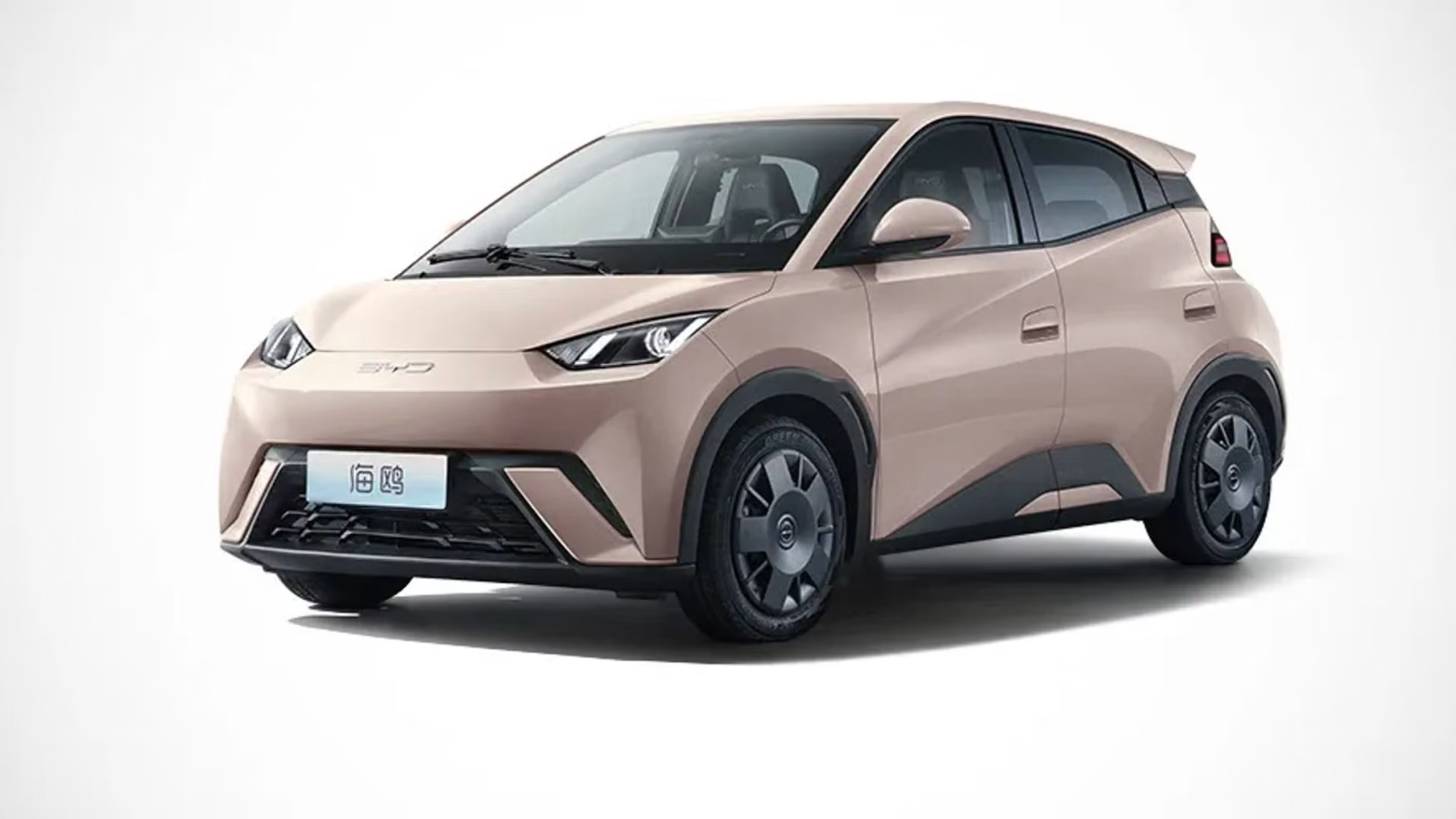

Later this year, someone in Toronto will be able to walk into a dealership and buy a new electric car for about $22,000 Canadian. That is roughly $16,000 US. No American will be able to do the same thing, at any price, from any Chinese brand, and the reason has nothing to do with the cars.
How Canada got here
In August 2024, Canada announced a 100 percent tariff on Chinese-built electric vehicles, effective that October. It was a deliberate match of the American position, justified on the same grounds: oversupply, subsidies, labour standards. The effect was immediate and total. Shipments stopped almost overnight, which hit Tesla, Polestar and Volvo as much as anyone, since their Shanghai-built cars were what Canada had actually been importing. BYD’s plans to enter the country were shelved.
China responded by going after canola. By March 2025 there were 100 percent Chinese tariffs on Canadian canola oil, canola meal and peas, which is a serious problem for a country that grows a great deal of canola.
The deal that broke the stalemate was signed in Beijing in January 2026, the first visit by a Canadian prime minister since 2017. Canada takes up to 49,000 Chinese EVs a year at 6.1 percent; China drops its agricultural tariffs. Both sides described it as a return to how things worked before 2024, and the numbers support that: China exported 41,678 EVs to Canada in 2023, so the quota is close to the old normal rather than an opening of the floodgates.

What is actually coming, and when
BYD is furthest along and the only brand with a concrete dealer plan: roughly 20 stores, starting in Toronto and Vancouver, with Montreal and Calgary following. Reported prices are estimates until cars are on lots, but the shape of the lineup is clear.
| Model | Price from (CAD) | Range | What it competes with |
|---|---|---|---|
| BYD Seagull | About $22,000 | 305 km | Nothing. There is no new EV at this price in North America. |
| BYD Dolphin | About $33,000 | 427 km | Nissan LEAF, at roughly $7,000 less |
| BYD Atto 3 | About $35,000 | 420 km | Hyundai Kona Electric |
| BYD Seal | $44,990 | 570 km | Tesla Model 3, at about $10,000 less |
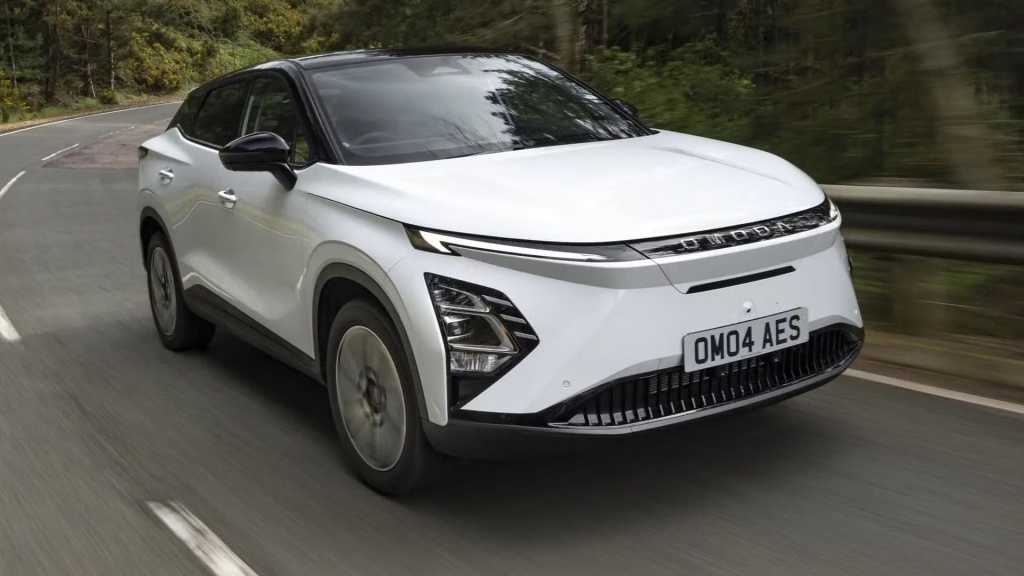
| Chery Omoda E5 | About $35,000 | 414 km | Kia EV3, dealer network planned for 2027 |
Behind BYD, the queue is longer than most people realise. Zeekr is expected through Volvo’s dealer network in 2027. Chery arrives under its Omoda and Jaecoo brands. NIO and XPeng are talked about for late 2027. Lotus, Chinese-owned, already sells the Eletre in Canada today. Dongfeng showed six EVs publicly in Canada in July.
The three catches
The headline is real, but the fine print does a lot of work, and most coverage skips it.
- The quota is shared, not per brand. All 49,000 units cover every Chinese-assembled EV from every manufacturer. BYD, Zeekr, Chery and anyone else draw from the same pool. Car number 49,001 pays the full 100 percent, which would push a Dolphin well past $35,000 and erase the entire argument for buying one.
- No federal rebate. Canada’s Electric Vehicle Affordability Program, which launched in February 2026, is worth up to $5,000 but requires North American final assembly. No Chinese-built car qualifies. A $35,000 BYD and a $42,000 Nissan are closer than the stickers suggest.
- Dealers and service take years, not months. Twenty stores in four metros is a start, not a network. If you live outside Toronto, Vancouver, Montreal or Calgary, the practical answer through 2026 is still no.
Why this matters south of the border
North America now has three different answers to the same question. Mexico buys Chinese EVs freely, and they dominate its market. Canada has just reopened its door at a measured, quota-limited crack. The United States keeps the door shut.
That makes Canada the most useful experiment on the continent, because it is the closest thing to an American market that will now sell these cars. Same winters, same highway distances, same safety regime, same buyers driving the same commutes. When the Seagull and the Dolphin meet a Manitoba February, we will find out whether the price advantage survives contact with conditions that punish a small battery.
A $22,000 EV in Toronto and a $27,600 EV in Detroit are not the same market, and everyone in Detroit will notice.
The gap is the point
The cheapest new EV an American can buy is the Chevrolet Bolt at $27,600, which sits at the top of our list of the cheapest EVs in America. It is a genuinely good car and it charges faster than a Model Y. It is also roughly $6,000 more than a Seagull will cost a Canadian, for less range than a Dolphin.

Our take
Canada did not open its market out of enthusiasm for Chinese cars. It traded access for canola, which is about as unsentimental as trade policy gets. But the effect is the same either way: within a year, Canadians will have cheap EV options that Americans do not, bought from dealers a few hours’ drive from Seattle, Detroit and Buffalo.
The interesting part is not whether the cars are good. Europe and Australia have already answered that, and the answer is mostly yes. The interesting part is what happens to the American conversation about affordable EVs once there is a working example of one just across the border. We will be watching what the quota actually fills, what these cars do in a real Canadian winter, and how they hold up on range against their own claims. All of it goes into the EV Range Chart as the figures arrive.
⚡ What is coming next: See all 127 upcoming electric cars, including the ones sold only in China, Europe and India, in our Definitive Guide to Upcoming Electric Cars. The tracker marks which ones are coming to the US.
Tariff and quota terms as announced by the Government of Canada in January 2026 and reported by CBC, The Globe and Mail and Reuters. Pricing and launch timing are pre-launch estimates from Canadian retailers and trade press, and should be treated as such until cars are on sale. Range figures are WLTP or Chinese ratings, not EPA.
Electric Future
