
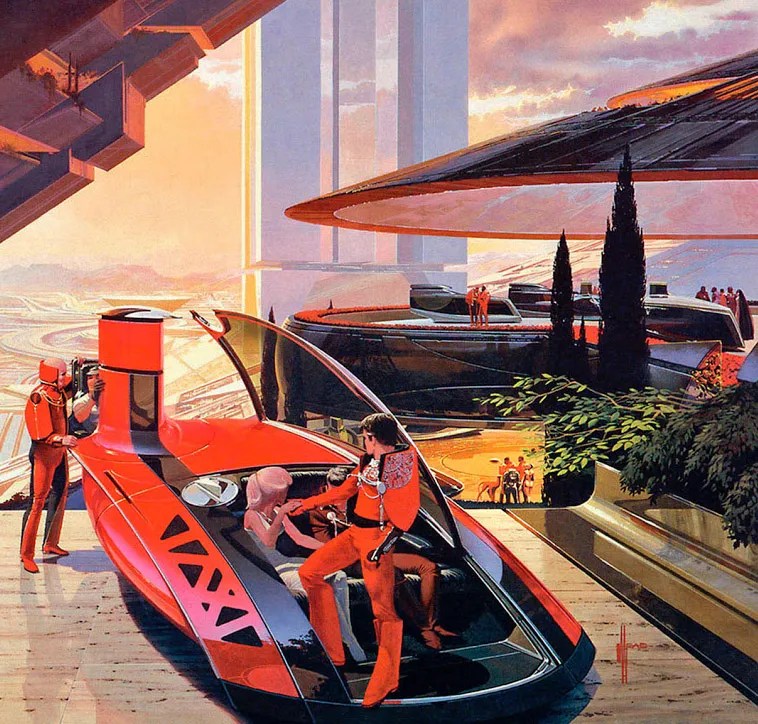
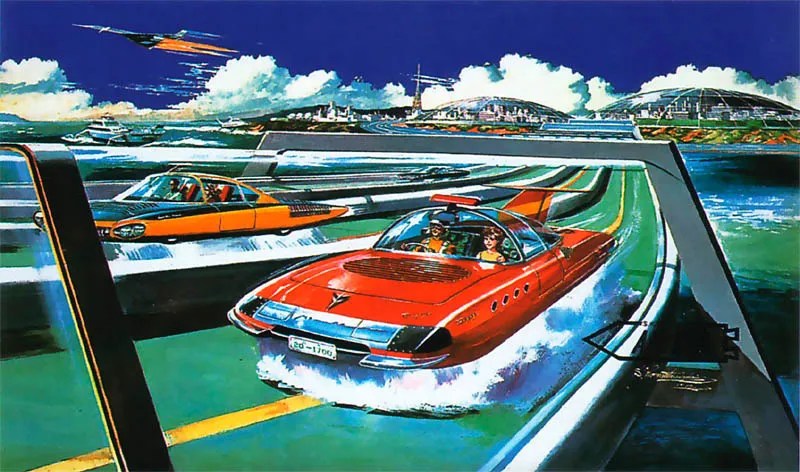
Every era has its own vision of the future. And no era imagined the future more confidently — or more wrongly — than the mid-twentieth century. The cars of the 1950s, 60s, and 70s conjured a tomorrow of jet-age elegance, bubble canopies, and vehicles that floated above traffic on invisible cushions of optimism. They were wildly impractical. They were also some of the most visually extraordinary objects ever designed.
The Jet Age on Wheels
The postwar boom gave designers permission to dream without constraint. Fuelled by atomic-age optimism and the space race, the concept cars of the late 1950s and early 1960s borrowed their vocabulary from aerospace: swept fins borrowed from jet fighters, canopies lifted from cockpits, chrome accents that evoked rocket exhaust. The 1958 Lincoln Futura — later repurposed as the original Batmobile — is perhaps the purest expression of this moment: a car so aggressively forward-looking it became a cultural icon before it ever inspired a production vehicle.
The Interior as Control Room
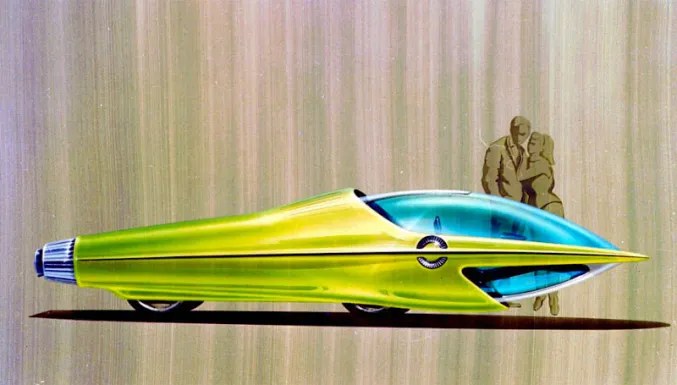
Inside these vision cars, designers imagined a future in which driving would become something closer to piloting. Panoramic windshields stretched from door to door. Instrument panels bristled with dials and toggles. Seating was arranged for a kind of command presence rather than mere transportation. The couple depicted in countless concept illustrations — she in gloves, he at a joystick — weren’t driving. They were presiding over the future.
The Colour of Tomorrow
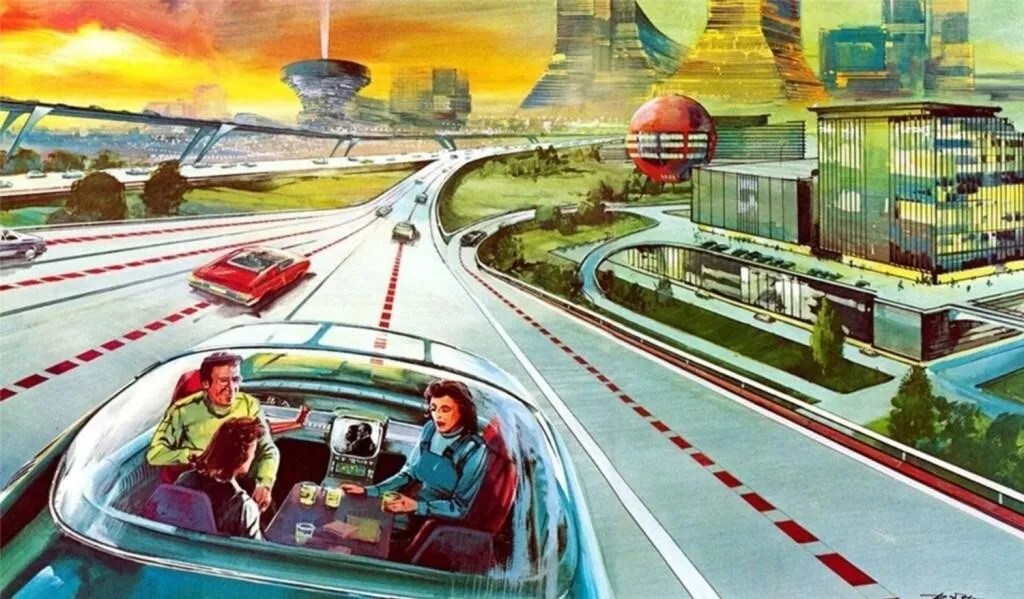
Retro futuristic cars didn’t come in sensible shades. They came in the colours of science fiction: lemon yellows, coral pinks, metallic teals, and chrome-white. The palette was a deliberate rejection of the utilitarian — these were vehicles designed to announce the arrival of a new kind of life, and the colour was part of the announcement. Seen today, these choices feel less dated than they feel liberated — a reminder that the relationship between function and colour is entirely negotiable.
When Cars Could Fly
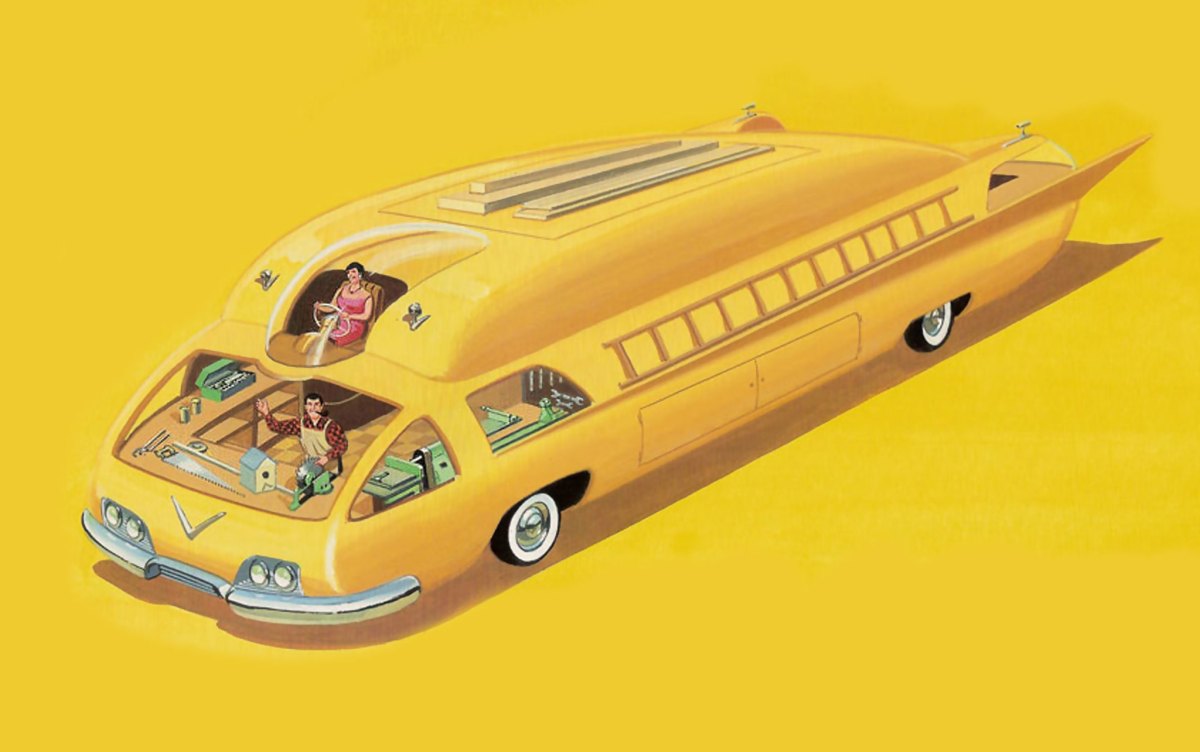
The flying car was the era’s most persistent fantasy. Practically every World’s Fair between 1939 and 1970 featured some version of a personal aerial vehicle, and the illustrated futures of the period routinely depicted elevated highways and skyborne commuters navigating between gleaming towers. The fantasy was wrong about the mechanics but right about the desire — which is probably why the flying car keeps resurfacing in every generation’s vision of what’s next.
Why It Matters Now
The retro futuristic car holds a specific lesson for anyone thinking about where electric vehicles are going. The concept car tradition — vehicles designed to provoke imagination rather than enter production — is having a genuine revival as EV platforms liberate designers from the constraints of combustion packaging. Without an engine up front and a transmission tunnel down the middle, the interior of a car can be almost anything. The designers of the 1950s understood that intuitively, even if the technology wasn’t ready. It is now.

 Electric Future